Cityscope – Urban Kaleidoscope

•November 26, 2008 • Leave a Comment

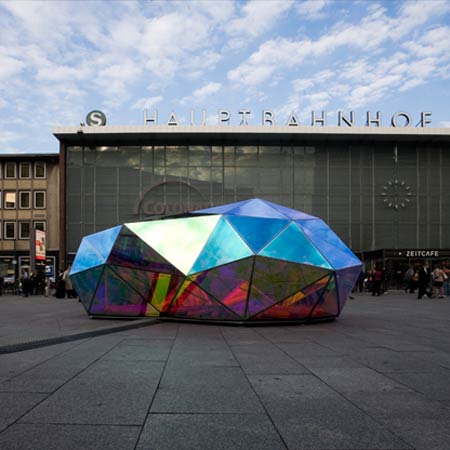
German designer Marco Hemmerling has created a faceted installation in Cologne, Germany, called Cityscope that reflects fragments of surrounding buildings:

Cityscope – Urban Kaleidoscope

The installation „cityscope“ deals with the fragmented perception of urban spaces. The bevelling structure can be seen as an urban kaleidoscope, that reflects fragmented views on the city and composes at the same time a three-dimensional image of the surrounding facades.
Cityscope by Marco Hemmerling 

While moving around the sculpture the images, that reflect on the triangulated envelope, continuously change. In that way the beholder becomes an integral part of the installation and its complex reflections.

The radiant foil, that is applied to the outer skin of the sculpture reflects, dependent on the daylight situation and the position of the beholder, the light in different colours.

The colour-transformation generates an intentional alienation, that reinforces the idea of a fragmented perception.

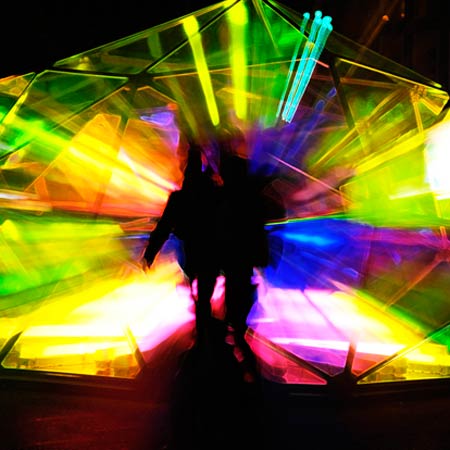
At night the reflective, colour-distorting film on its surface becomes transparent and the structure is lit from within.

The project was designed digitally in 3D from the beginning, using Rhinoceros Software. The final shape is related to the site and reacts to the height and proportions of the surroundings (station, church, dome…).

The production of the elements was realized by digital fabrication technology (CAD-CAM) for both the aluminium framework and the synthetic elements of the bevelling skin. The light installation was programmed with different sequences in order to support a dynamic perception of the sculpture by night.

I don’t want to be a killjoy but I gotta say, seeing in colour is such a gift.
Awesome installation!
…Come to think of it, Auckland City has a similar looking one:

Mountain Fountain - Aotea Square, Auckland City, New Zealand

Err… Geometrically speaking of course.

YouTube Now Playing Widescreen Videos

•November 26, 2008 • Leave a Comment

Logged onto YouTube Recently?

You’ve probably noticed that everybody’s favorite internet video site has undergone a slight change—everything has gone widescreen! That’s right, now you can watch a dog humping a baby in 16:9, rather than the original boring ol’ 4:3.

Though, if you’d rather stick to boring ol’ 4:3, that’s not going away either.

Chadwick J. YouTube Video Response

•November 26, 2008 • Leave a Comment

I recently received a comment response on YouTube from a man by the name of Chadwick J. From what I can tell, this guy is an aspiring lyricist. [Unsigned] Good on him. Well deserving of a post:

You will appreciate this…

What up Neurophysiologic?

I can tell by your comments that you will appreciate this. If the hook doesn’t catch you keep it movin. I am sure you will appreciate this whole thing.

Real Hip-Hop LIVES!

Peace!
Chadwick J!

Visit: The Ebony Bones

Star Trek 90210

•November 26, 2008 • Leave a Comment

Jet Pack Pilot Flies Across Canyon

•November 25, 2008 • Leave a Comment

Eric Scott sped across the 1,500-foot-wide Royal Gorge in southern Colorado at a speed of 75 mph. With a jetpack.

The sponsoring Go Fast Sports & Beverage says Eric Scott took 21 seconds to cross the Royal Gorge at 75 mph on Monday. He didn’t even use a parachute while flying across the 1,100-foot-deep canyon.
He was wearing a jet pack powered by hydrogen peroxide and developed by Jet Pack International.

The company developed it for stunts, promotions and other events for Go Fast. Both companies are based in Denver and were founded by entrepreneur Troy Widgery.

Jetpack flight at royal Gorge By Eric Scott
during the past GO FAST GAMES in Canon City Colorado

Yeah, well, anybody can jetpack over a gorge…

Daily Encouragement [5]

•November 25, 2008 • Leave a Comment

Rejected Dark Knight Script

•November 25, 2008 • Leave a Comment

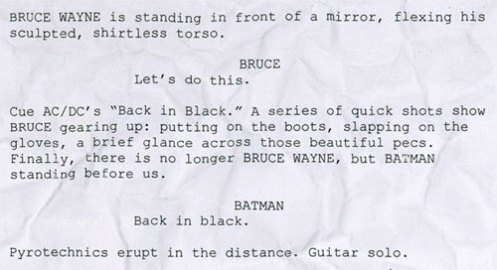
Michael Bay, director of Transformers and other predictable blockbuster movies (in which his own name often appears as big as the main titles) apparently wrote a script for The Dark Knight that was rejected by Warner Bros. Amazingly, it has surfaced on the net… (Obviously this was not written by the real Michael Bay, but damn good for a laugh)

Read the rest, here: Spill

BECK – Gamma Ray [music video]

•November 25, 2008 • Leave a Comment

WARNING: Not recommended for those of you who are on acid

I never thought this before, but Chloë Sevigny is pretty darn hot… as a clown.

Happy 10th Birthday: International Space Station!

•November 25, 2008 • Leave a Comment

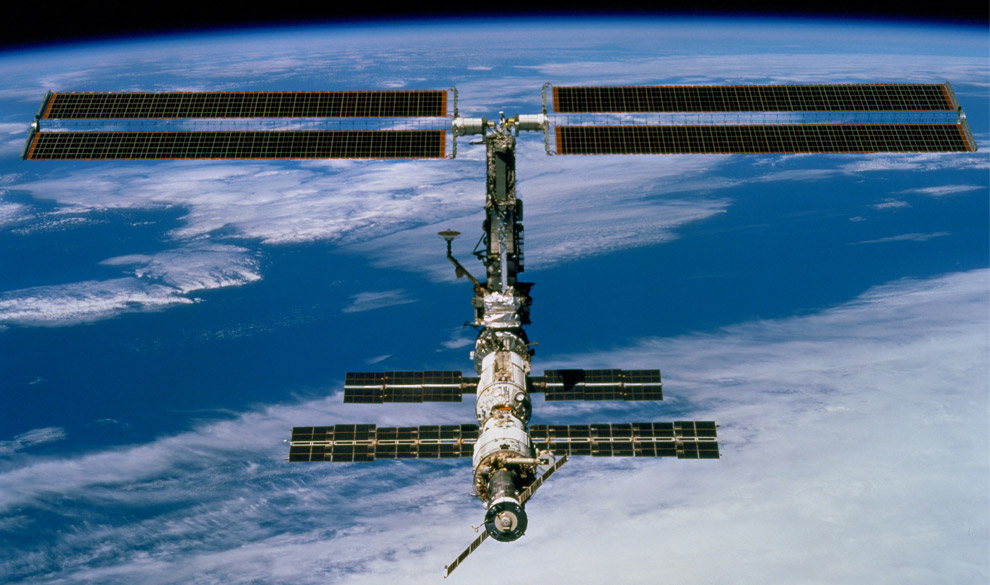
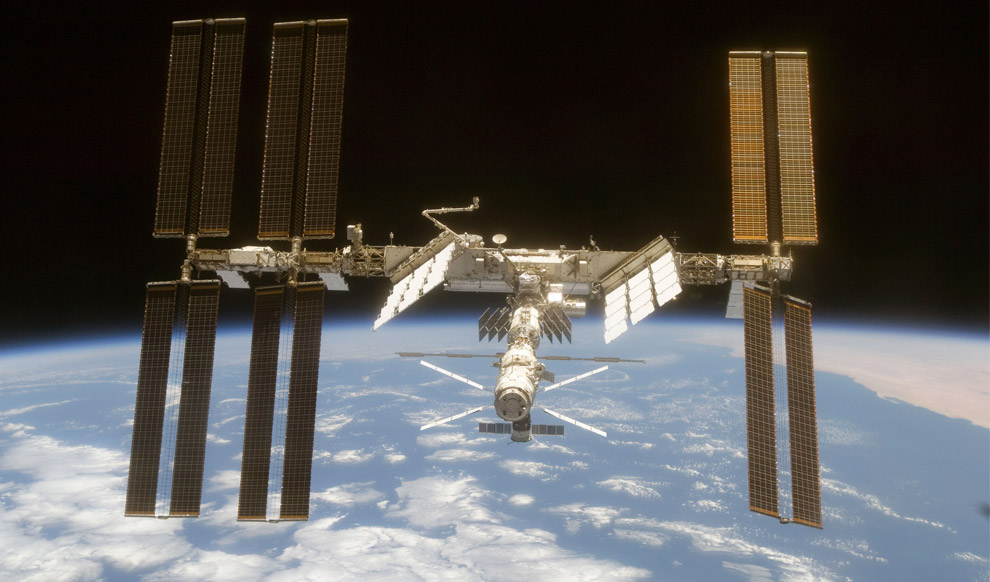
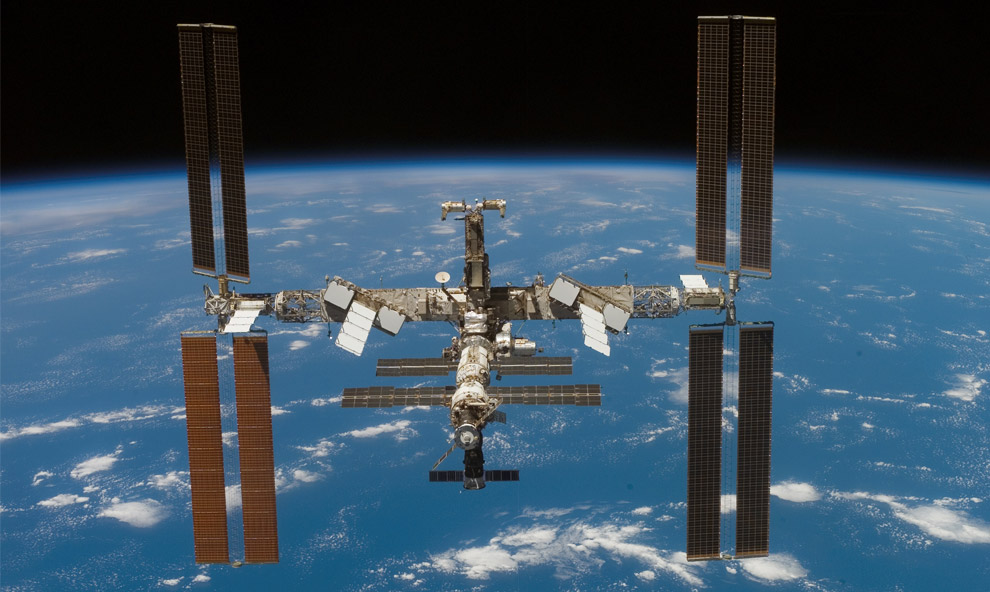
This month, the International Space Station turns 10.

One of the coolest examples of humanity’s huge leaps forward in technology, it’s still an amazing sight to behold 10 years later.

In December 1998, the crew of Space Shuttle Mission STS-88 began construction of the International Space Station.  Long live the ISS!

Click to Enlarge:

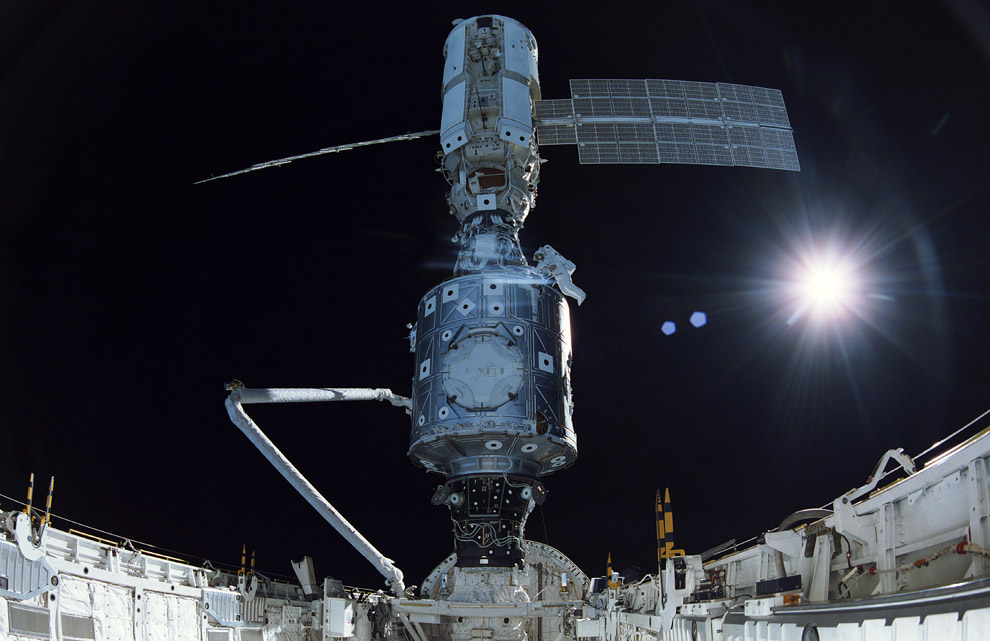
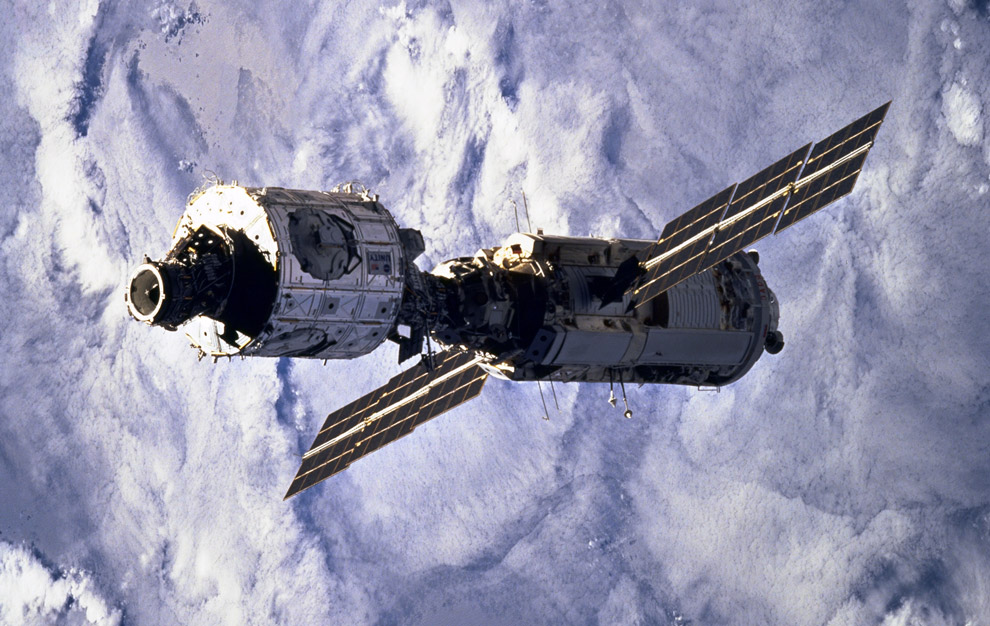
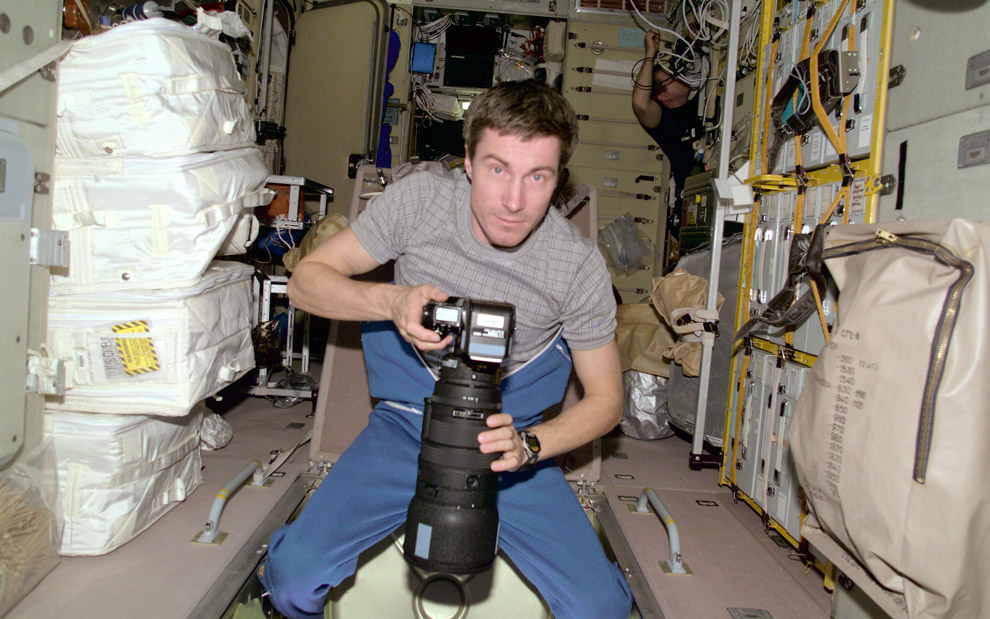
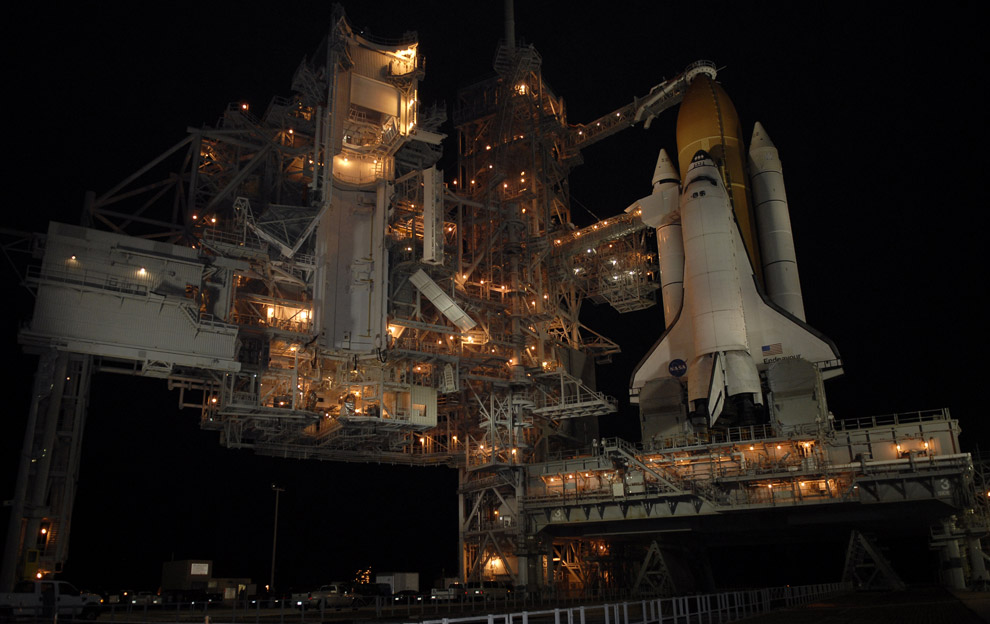
Astronaut James Newman is seen here making final connections the US built unity node to the Russian built Zarya Module - large format imax camera photoRussian-built FGB, also called Zarya, approaches the Space Shuttle Endeavour and the U.S.-built Node 1, also called Unity [foreground]Astronaut Robert L. Curbeam, STS-98 mission specialist, was photographed by a member of the Expedition One crew in the newly installed Destiny laboratory during the second of three space walks on February 12th, 2001Blanketing clouds form the backdrop for this 70mm scene of the connected Zarya and Unity modules after having been released from Endeavour's cargo bay a bit earlier on December 4th, 1998Cosmonaut Sergei K. Krikalev, Expedition One flight engineer, prepares to photograph some geographic targets of opportunity through a viewing port on the International Space Station's Zvezda (December of 2000)Space shuttle Endeavour is shown after rollback of the rotating service structure. The rollback was in preparation for liftoff on the STS-126 mission with a crew of seven

Above Endeavour’s external tank is the vent hood, known as the “beanie cap,” at the end of the gaseous oxygen vent arm, extending from the fixed service structure. Below is the orbiter access arm with the White Room at the end, flush against the shuttle. The rotating structure provides protected access to the shuttle for changeout and servicing of payloads at the pad. Photo taken Nov. 14, 2008.

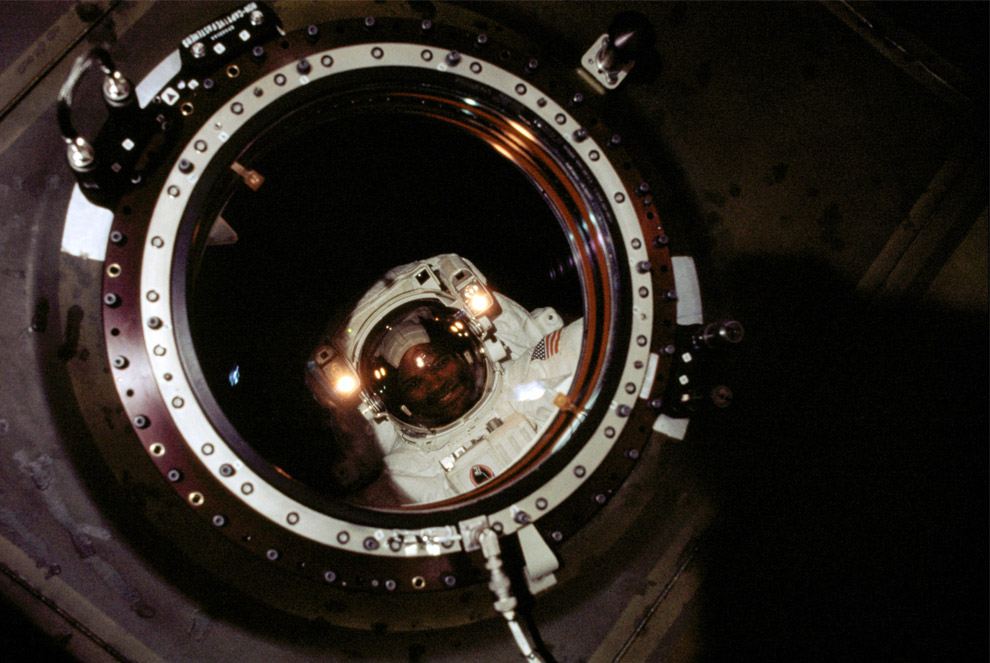
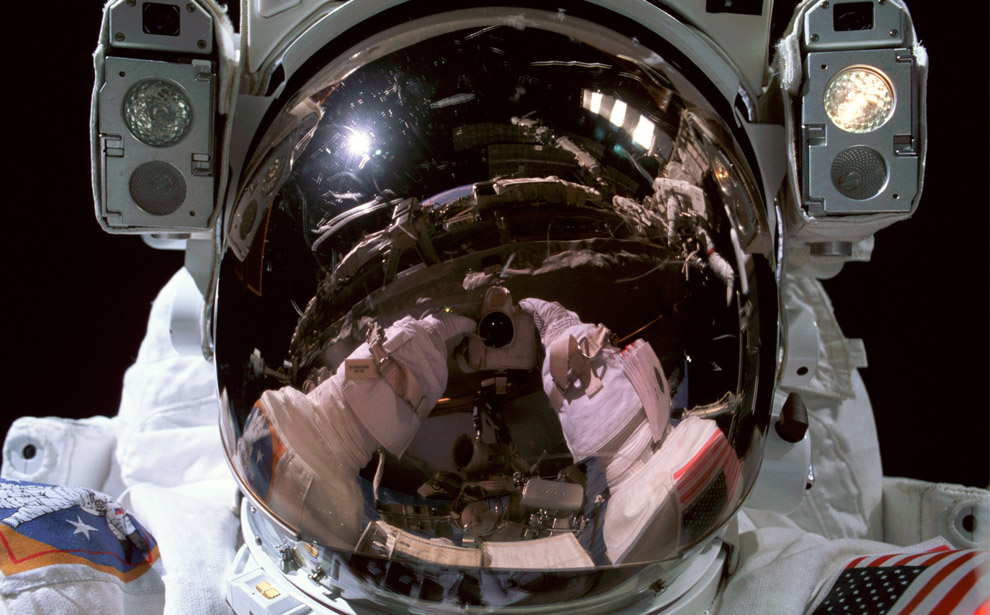
Astronaut Donald R. Pettit, Expedition 6 NASA ISS science officer, photographs his helmet visor during a session of extravehicular activity (EVA) on January 15th, 2003The Phantom Torso

The Phantom Torso, seen here on May 13th, 2001 in the Destiny laboratory on the International Space Station (ISS), is designed to measure the effects of radiation on organs inside the body by using a torso that is similar to those used to train radiologists on Earth. The torso is equivalent in height and weight to an average adult male. It contains radiation detectors that will measure, in real-time, how much radiation the brain, thyroid, stomach, colon, and heart and lung area receive on a daily basis. The data will be used to determine how the body reacts to and shields its internal organs from radiation, which will be important for longer duration space flights.

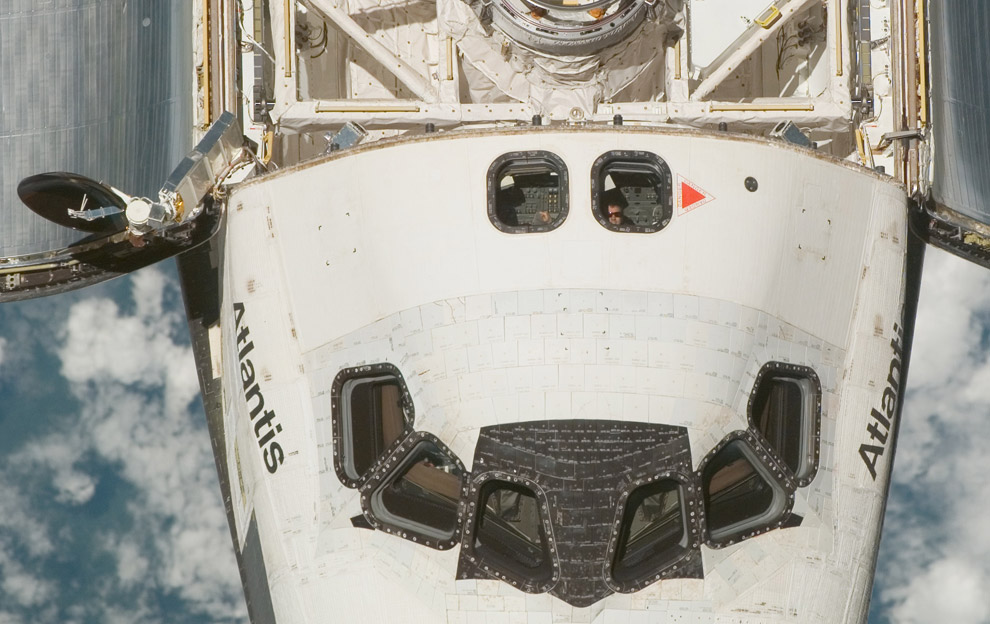
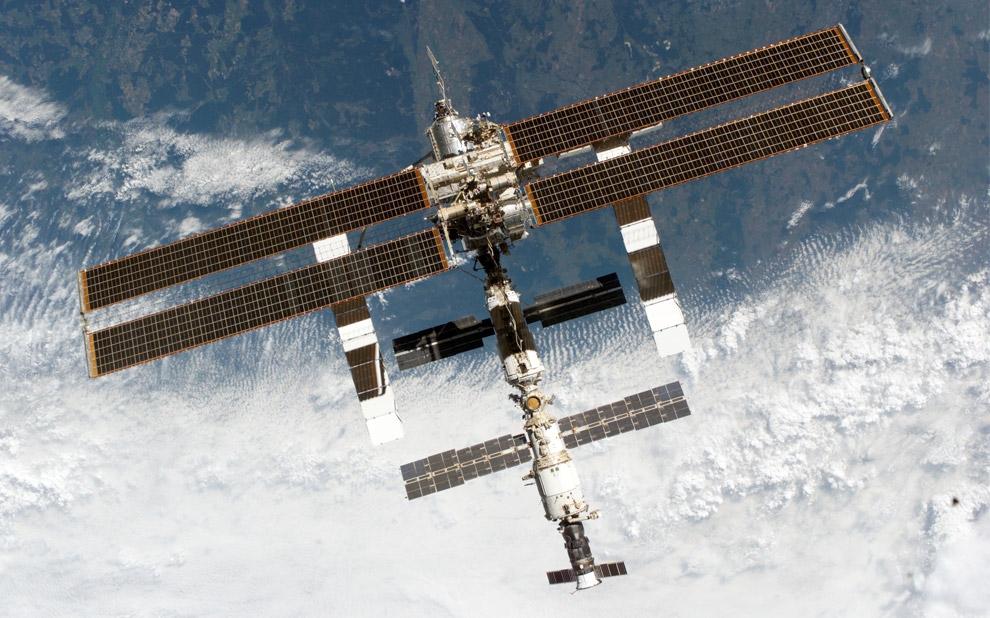
An overhead view of the exterior of the Space Shuttle Atlantis' crew cabin, part of its payload bay doors and docking system was provided by Expedition 16 crewmembersThe ISS, seen following undocking at 1.13 p.m. (CST), December 9, 2000. This is one of the first images of the entire station with its new solar array panels deployed

Before separation, the shuttle and space station had been docked to one another for 7 days. Endeavour moved downward from the space station, then began a tail-first circle at a distance of about 500 feet. The maneuver, with pilot Michael J. Bloomfield at the controls, took about an hour.

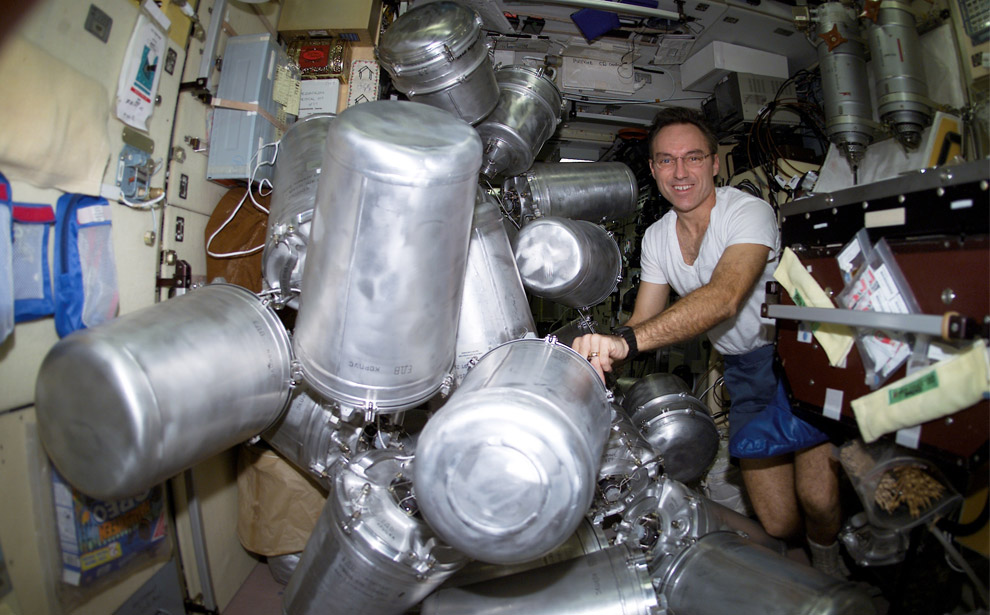
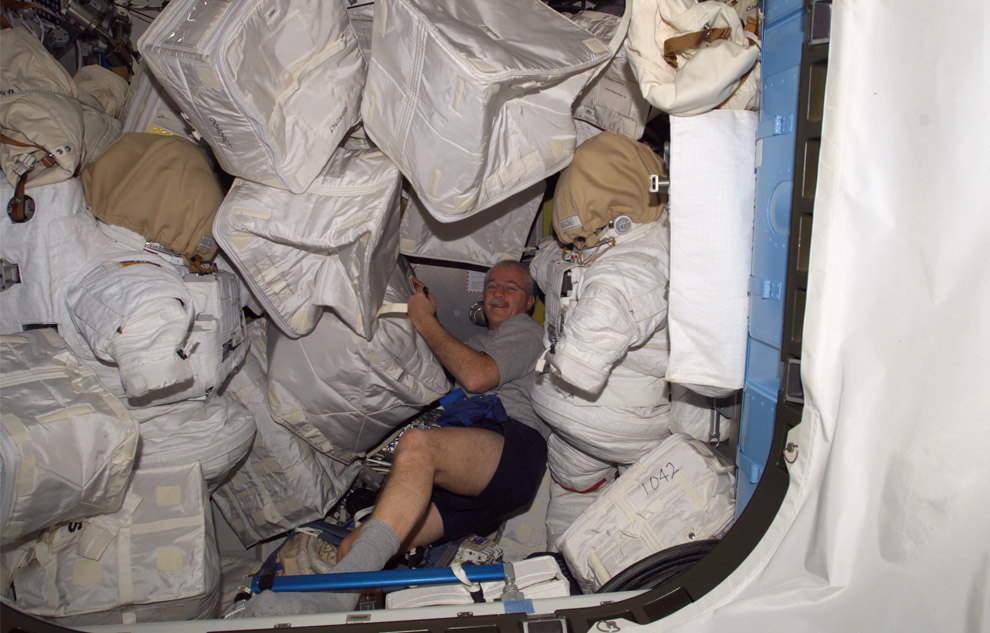
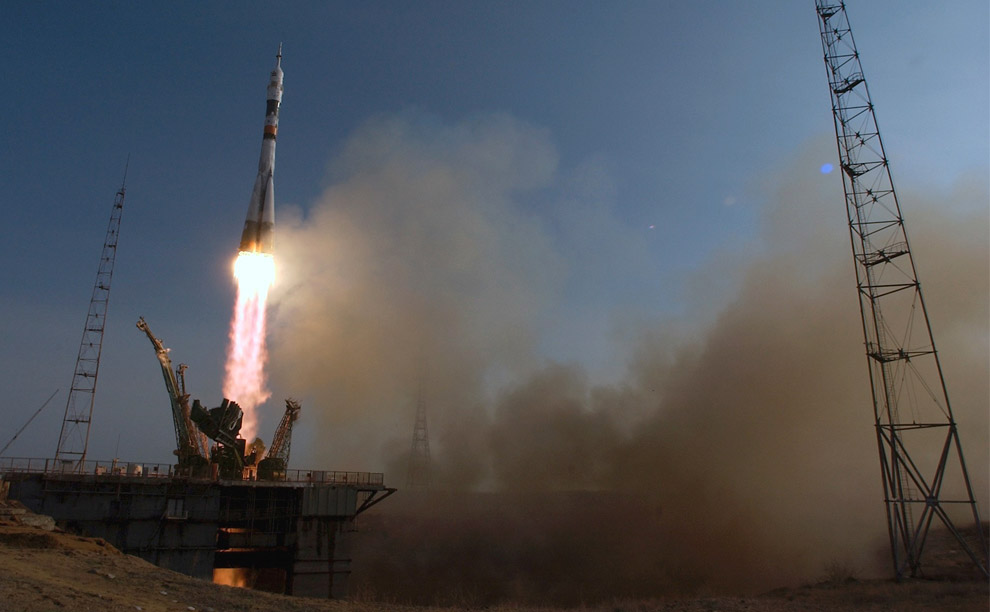
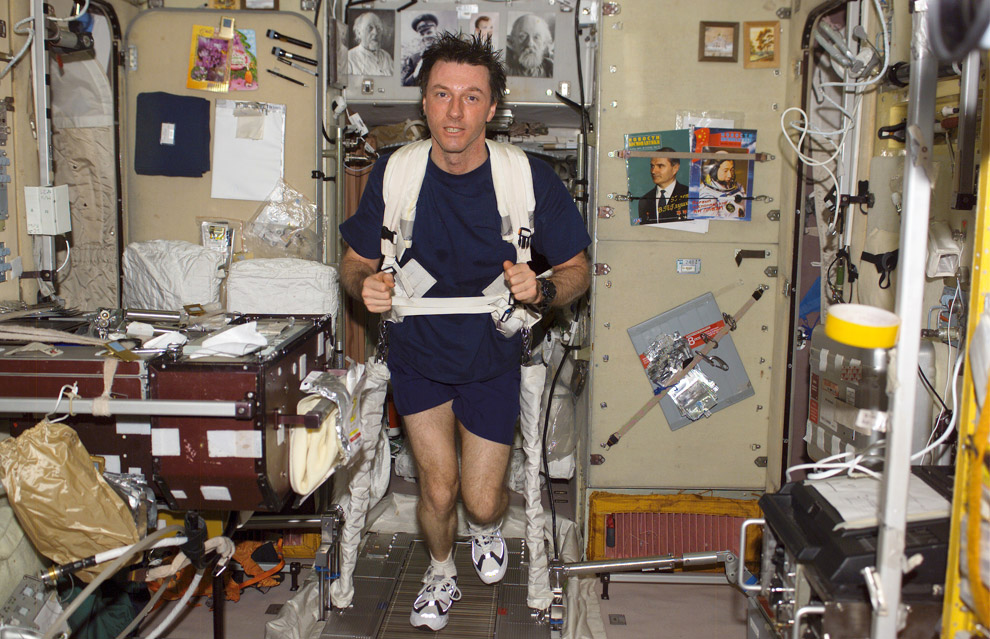
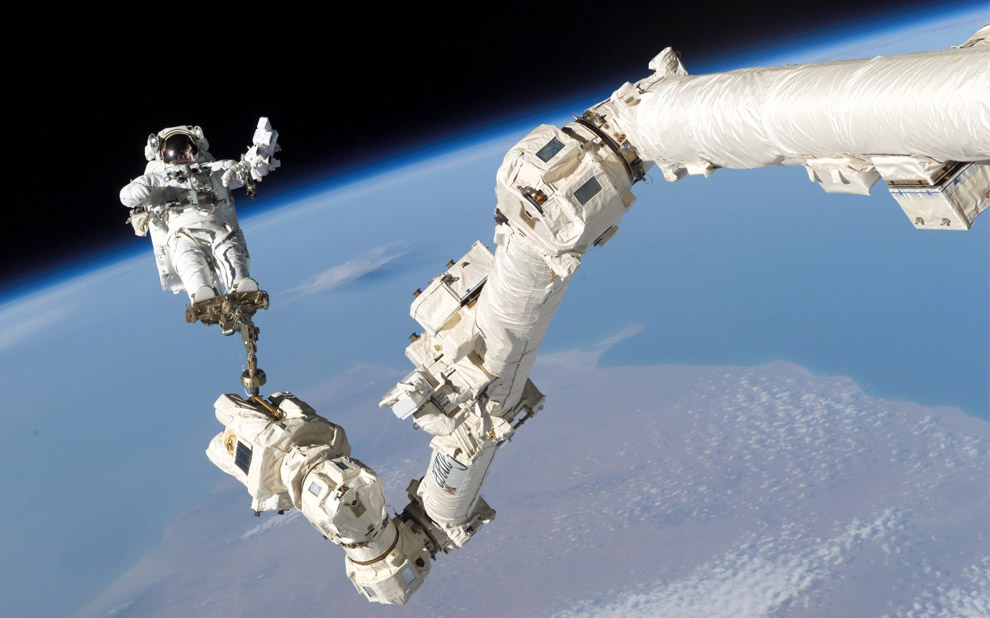
Astronaut Carl E. Walz, Expedition Four flight engineer, catalogs canisters of water in the Zvezda Service Module on the International Space Station on March 11th, 2002Astronaut John L. Phillips, Expedition 11 NASA ISS science officer and flight engineer, is photographed among stowage bags in an airlock on the ISS on May 18th, 2005Space Shuttle Atlantis backdropped over a mountainous coastline was photographed on February 16th, 2001 by the three-man ExpeditionThe Soyuz TMA-4 vehicle blasts off from the Baikonur Cosmodrome in Kazakhstan on April 19, 2004, carrying a crew of three to the ISSThe Canadarm2 (center) and solar array panel wings on the International Space StationAstronaut C. Michael Foale, Expedition 8 commander and NASA ISS science officer, equipped with a bungee harness, exercises on the Treadmill Vibration Isolation System (TVIS) in the Zvezda Service Module on the ISSAstronaut Stephen Robinson rides the 17-meter-long Canadarm2 during the STS-114 mission of the space shuttle Discovery to the ISS in August of 2005

The Canadarm2 aboard the ISS has multiple joints and is capable of maneuvering payloads as massive as 116,000 kilograms, equivalent to a fully loaded bus.

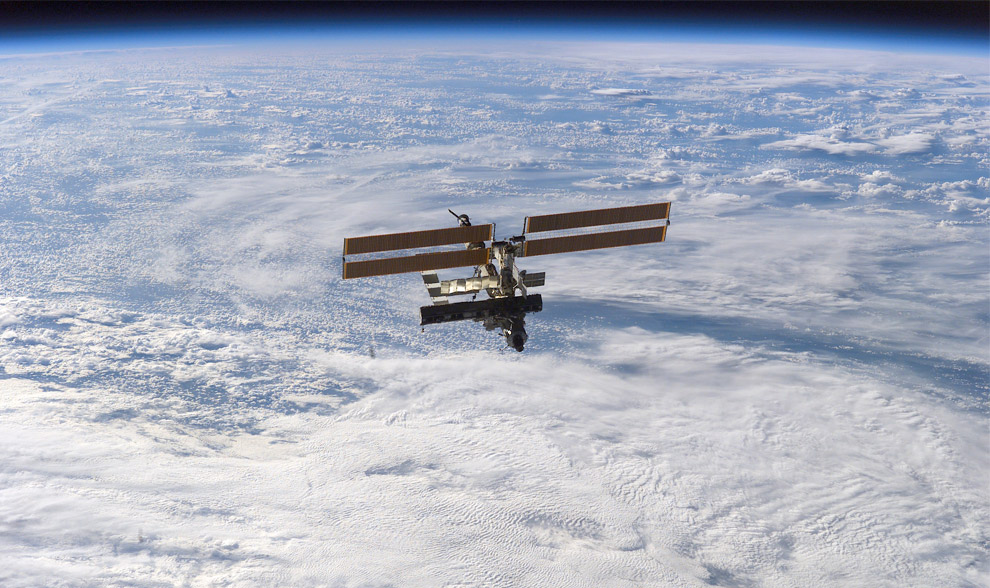
The ISS is backdropped against a cloud-covered part of Earth as the orbital outpost moves away from the Space Shuttle Discovery on August 6th, 2005A spacesuit-turned-satellite called SuitSat began its orbit around the Earth after it was released by the ISS Expedition 12 crewmembers during a session of extravehicular activity (EVA) on Feb. 3, 2006

SuitSat, an unneeded Russian Orlan spacesuit, was outfitted by the crew with three batteries, internal sensors and a radio transmitter, which faintly transmitted recorded voices of school children to amateur radio operators worldwide. The suit entered the atmosphere and burned a few weeks later.

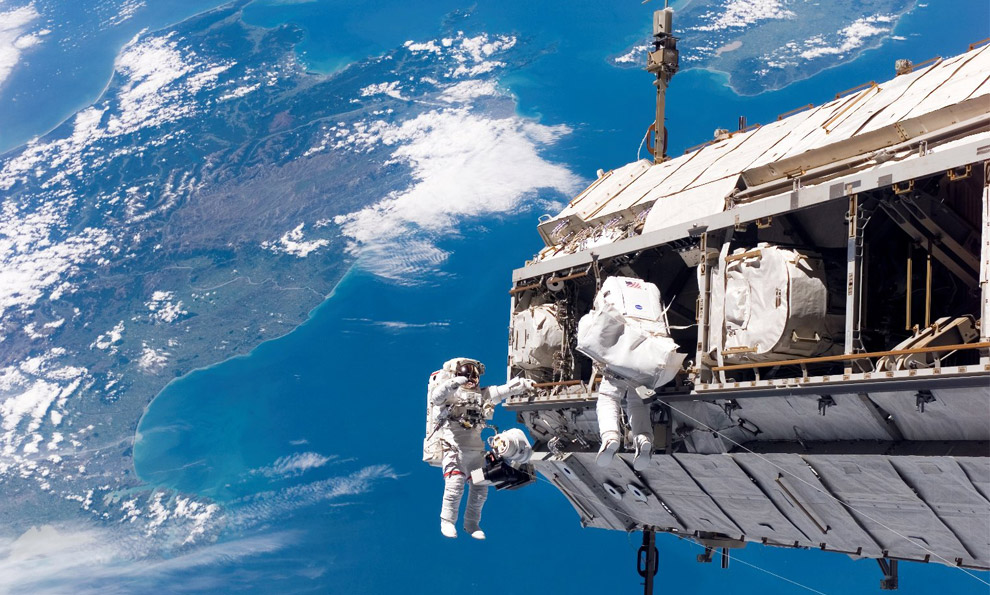
Space Shuttle Atlantis following the undocking of the two spacecraftThe ISS is seen from Space Shuttle Discovery as the two spacecraft begin their relative separationHigh above New Zealand and Cook Strait, astronauts Robert L. Curbeam and Christer Fuglesang work to attach a new truss segment to the ISS and begin to upgrade the power grid on December 12th, 2006


New Zealand!

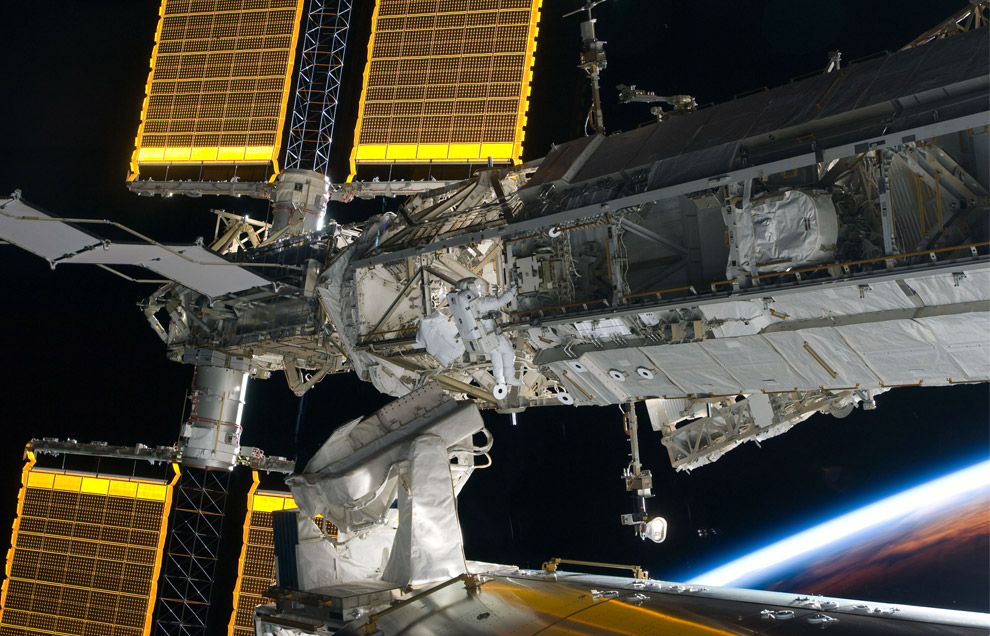
Astronaut Steve Bowen, STS-126 mission specialist, participates in the mission's first session of extravehicular activity (EVA) on November 18th, 2008, as construction and maintenance continue on the ISS

During the six-hour, 52-minute spacewalk, Bowen and astronaut Heidemarie Stefanyshyn-Piper (out of frame), mission specialist, worked to clean and lubricate part of the station’s starboard Solar Alpha Rotary Joints (SARJ) and to remove two of SARJ’s 12 trundle bearing assemblies. The spacewalkers also removed a depleted nitrogen tank from a stowage platform on the outside of the complex and moved it into Endeavour’s cargo bay.

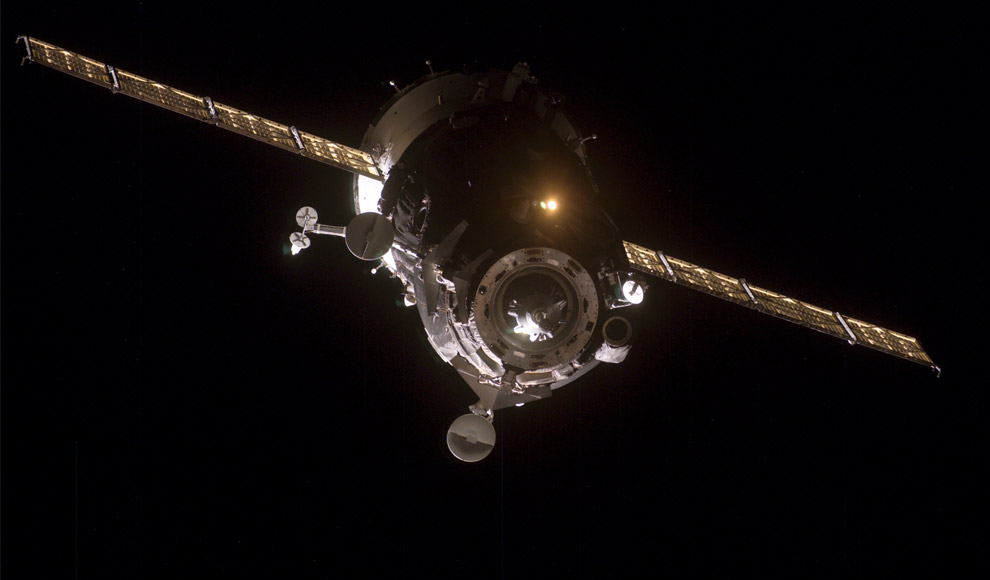
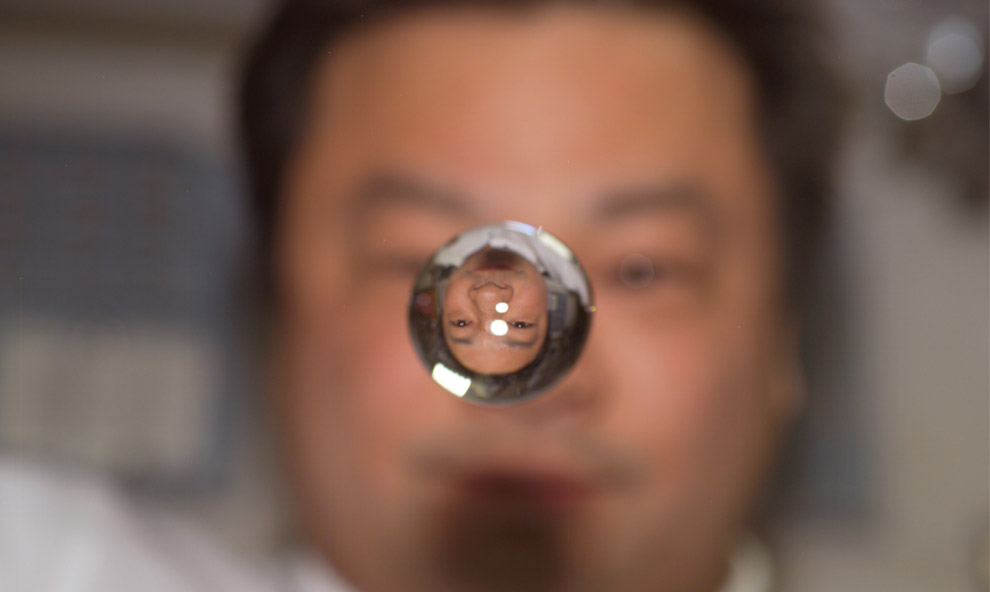
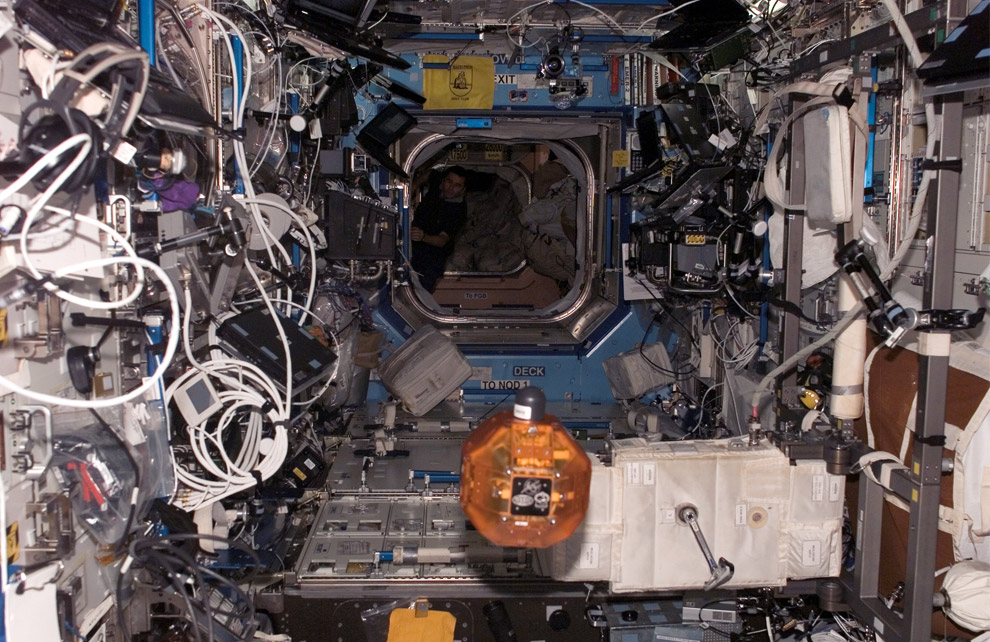
The Soyuz 14 (TMA-10) spacecraft approaches the International Space StationAstronaut Leroy Chiao, Expedition 10 commander and NASA ISS science officer, watches a water bubble float between him and the camera, showing his image refracted, on the IISS on January 15th, 2005Destiny laboratory of the International Space Station shows one floating ball-shaped item which is actually one of the Synchronized Position Hold, Engage, Reorient, Experimental Satellites The Expedition Three (white shirts), STS-105 (striped shirts), and Expedition Two (red shirts) crews assemble for a group photo in the Destiny laboratory on the International Space Station on August 17th, 2001The ISS is seen moving away from the Space Shuttle Atlantis on June 19th, 2007

 Extraordinarily Epic!

Game: DOOM

•November 25, 2008 • Leave a Comment

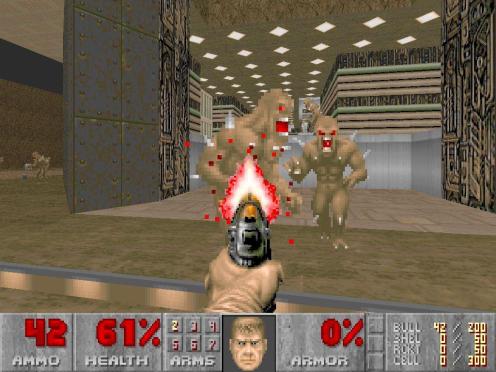
The first episode of the legendary first person shooter – now playable in your browser!

What hasn’t Doom been ported to at this point? You can’t answer “Flash 10!” anymore, as an enterprising Newgrounds contributor has gone to the effort to port the id Software classic to Adobe’s platform, making the first-person shooter playable in the web browser of your choice. [THIS GAME REQUIRES FLASH PLAYER 10; Sorry, no music 😦 ]

CONTROLS
W, A, S, D or ARROW KEYS – movement
Q, E – strage left, right
SPACE – fire
R – use door/switch
SHIFT – run
ESCAPE – menu
TAB – map
NUMBER KEYS – change weapon

TimeSculpture by The Mill

•November 25, 2008 • 1 Comment

Brilliant new ad for Toshiba by The Mill

It looks like multiple passes with a bullet-time camera setup. But really, I don’t care much for the tech they’re promoting; it’s just plain cool.

The Making of Toshiba Timesculpture

Remote Controlled HOVERING SPACE SURFER!!! omg omg omg omg omg

•November 25, 2008 • Leave a Comment

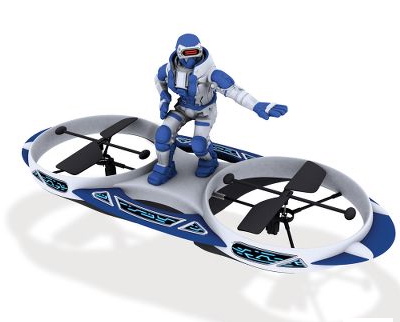
This is the remote controlled 9″ space surfer that hovers in the air, spins 360°, and moves left, right, forward, and backward–all while levitating parallel to the ground. Capable of indoor or outdoor flights, the space surfer has dual propellers that generate enough thrust to send the device from a stationary position to 66-feet in the air without requiring a hand-launch. The radio frequency remote control has proportional throttle and trim settings that allow it to be precisely controlled through climbs, descents, and turns. Made from durable EPP foam, the aircraft’s body withstands turbulent flights and crash landings.  Remote has a 27′ range and requires a 9-volt battery. Operates for 15 minutes after a 70-minute charge.

OMG OMG OMG
Anything with the word Space, i’m pretty much down with.